Christians and Alchohol
Christians and Alcohol

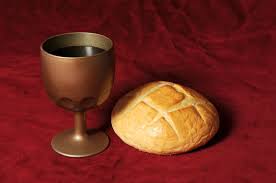
The scriptures do contain warnings about drinking alcoholic beverages but there are also verses that allow one to consume them.
• Deuteronomy 14:26 26 And thou shalt bestow that money for whatsoever thy soul lusteth after, for oxen, or for sheep, or for wine, or for strong drink, or for whatsoever thy soul desireth: and thou shalt eat there before the LORD thy God, and thou shalt rejoice, thou, and thine household,”
• Ecclesiastes 9:7 instructs, “Drink your wine with a merry heart.”
• Psalm 104:14-15 states that God gives wine “that makes glad the heart of men.”
• Amos 9:14 discusses drinking wine from your own vineyard as a sign of God’s blessing.
If you look carefully through all of the verses some of them are talking about those under a Nazarite vow. They could not drink or eat any product of grapes including the fruit itself or grape juice. I have met Christians who follow the old laws in modernity, pledge themselves to a Nazarite vow, and then drink grape juice and eat grapes, but they really don’t understand the scriptures.
Certain verses make a distinction between drinking alcohol and being drunk, with drunkenness being specified as the sin. I once heard a famous Louisiana Bible preacher thump his pulpit with his Bible and demand that all alcohol consumption is sin and that whenever the Bible mentions wine it means grape juice. If you use a lexicon you will find that wine is not always grape juice. The Hebrew word yayin may mean fermented or unfermented grape juice that has been squeezed out. How would Noah have gotten drunk on grape juice? How could the host of the wedding in Cana have said that the wine Jesus had miraculously created was the best wine if it were merely a good batch of grape juice? If we demand that Jesus would only make grape juice and not wine or if we demand that all of the wedding attendees were so drunk that they could not tell the difference between wine and grape juice, we are simply rationalizing away the scriptures that we disagree with to force them into conformity with our own personal religious conviction!
This famous preacher I alluded to earlier was guilty of making the bible conform to his personal doctrine of his denomination and Bible college.
That said, when we as Christians drink any kind of alcoholic beverage, if we get near or pass into drunkenness, that greatly increases the chances of lowering our inhibitions and talking in coarse language or engaging in promiscuous erotic behavior outside of a covenant with a spouse to Jesus. Not only are we then guilty of sinning, but we are promoting bad examples, and we give devils license to come into our lives and cause more problems unless we repent of our sin to those we have harmed by our bad example, hurt, or enticed into sin with us, Christian or not! And of course we need to repent to Jesus first and then walk away from the former sin.
Because of inherited curses or bodily or emotional weaknesses some people, including Christians, may need to totally abstain from alcohol. If you wish to totally forgo alcohol consumption for Jesus or weaker brothers and sisters, that is a good thing and there are blessings that come with it.
However, if you make yourself to be a better class of Christian because you consume no alcohol or attempt to enforce a law about no alcohol use, whatsoever, for all Christians, which does not agree with the entirety of scriptures, then you are on a slippery slope. Paul the apostle had an opportunity to tell Christians that all consumption of alcohol was a sin, but he did not. He told Timothy to use a little wine for his stomach sake. He rebuked the Corinthians for committing gluttony and getting drunk in the house of God. Paul did not directly rebuke them for eating or merely consuming alcohol. Jesus himself was accused of being a drunkard and glutton. There were probably times that he ate well and drank wine, but we know by the scriptures that He did not sin, so his detractors were embellishing the facts to impugn Jesus.
Luke seven records Jesus saying, “33For John the Baptist came neither eating bread nor drinking wine, and you say, ‘He has a demon.’ 34The Son of Man came eating and drinking, and you say, ‘Here is a glutton and a drunkard, a friend of tax collectors and sinners.’”
As Christians we are responsible for reading all of scripture and then meditating not only on what the Bible says, but measuring in context and circumstance, and taking into account the nuances of what the Bible doesn’t explicitly teach on specific issues. It is way too easy to give scriptures our own interpretation or carelessly follow the party-line of our favorite denomination, Bible teacher, or personal conviction.
While totally abstaining from alcohol consumption is not a bad thing, if you blow a gasket when another person partakes, but responsibly and in moderation, then you lose any benefit of your sacrifice by falling into anger, judgmental-ism, or lording it over another.
If you read Elliot’s Commentary, for example, it says that the consumption of alcohol is not sin. It is in the link below.
https://openbible.com/commentaries/deuteronomy/14-26.htm
Almost forty years ago, a fine church elder in many ways, was adamant that any consumption of alcohol was unholy and sin. He was literally raving that foolish Christians believed that Jesus’ miracle in Cana was not that Jesus produced magnificent grape juice, but that the wedding participants were so drunk that none of them knew the difference.
Why did Jesus choose the wedding at Cana for His first miracle? | GotQuestions.org
This elder went on to exclaim that any pastor or Bible teacher that taught that Jesus turned the water into wine was in sin and in error. The man demanded that since it is a sin to drink or make any type of alcohol, then, if Jesus made real wine, he, Jesus would be a sinner. Despite this brother’s many good deeds and teaching, in this he was the one in error. I have made mistakes before in teaching, so I need to be humble and careful. Teachers will be held to a higher standard.
James 3:1
So, then what is the sin?
Are we spending too much on “libation?”
Are we pushing the envelope in “socializing” and consumption quantity (getting drunk!) ?
Are we being a bad example? And then justifying it with scripture?
Have we put off replacing our son or daughters old and worn shoes, once, twice, three times, or more, so that we can keep a twelve pack in our man cave fridge?
Are we being rude and endangering a brother or sister in the Lord, by partaking in front of them, when they have a weakness in this area?
If consuming alcohol was the sin, why didn’t Paul just tell the Corinthians that and forbid the practice? Why did he tell them that they should eat and drink at home if they were going to be gluttons with food and strong drink?
https://biblehub.com/q/Why_drunk_at_Lord_s_Supper_in_Corinth.htm
As Christians we need to be careful not to force the Bible to conform to our or denominational doctrines or personal preferences! This is true whether we are talking about alcohol or a variety of scriptural subjects. How we handle alcohol consumption or teaching on alcohol use for Christians is quite the litmus test for whether one is Christian or simply religious, and “religiously” or “denominationally” rigid. Too many of us think we are being bold when we are actually being audacious, concerning teachings, in this and a variety of subjects. Then we may make matters worse by forcing conformity on issues where the Lord is not saying “No!” but … be careful.
- Waysides Along the Journey 3: Songs in the Night From Jesus. Christian non-fiction. Out of Print. Written by Wayne O’Conner
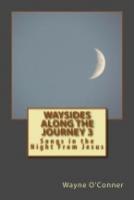
Waysides Along the Way #3
- Visitation. Christian Non-fiction. Christian non-fiction. Out of Print. Written by Wayne O’Conner
I had a vision that was unlike the few I have had before or after. Not only was the vision quite intense, but it lasted literally from sundown until sunup, rather than mere moments. I was sitting on the couch in my room and then got up and sat on the edge of my bed. And then the vision happened. In the vision, I could see Jesus sitting across from me on the small couch. And then the vision happened again, the next night, but it was quick and merely highlighted some of the things I’d seen the night before.
- The Baby Echolalia of Christendom. Christian non-fiction. Out of Print. Written by Wayne O’Conner
“Baby Echolalia” is not a mental disorder. Rather, it is a professional term for that stage in a baby’s development where it mimics sounds or voices in its environment but does not yet have the capacity to understand the meaning of those words and sounds. I believe that many Christians while being able to “play the game,” or use the right buzzwords, are only parroting what they have read or heard and do not truly understand the scriptures or their master the Lord Jesus Christ.
Christian leaders, within the traditional church structures and the non-traditional structures (e.g. home fellowships) rarely mature to the point that they are able to model and train new Christians to walk in a dynamic living relationship with the Lord Jesus Christ. Like the Pharisees of Jesus’ day, they have great knowledge of the Lord and possess a Religious Code of Ethics. Like the Pharisees of Jesus’ day, they stand in the doorway, between the Lord and his people, often hindering, more than helping.
Much in the same way that Saul promised his daughter Merab as a wife to David, but then gave her to another man (1Samuel 18:17, 1 Samuel 25:44), in New Testament times many men and women have been spiritually betrothed to Jesus Christ, but end up being bonded to institutions and religious leaders. At best many new converts are taught about God, rather than how to walk with Him. Often new believers, rather than learning to submit to Jesus Christ, are kept in a state of spiritual infancy and reliant upon their leaders, hindering their ability to mature, become more and more Christ-like, and dependent upon the Lord Himself.