Carnival World Book One, Chapters 8, 9 & 10

https://wayneoconner.com/carnival-world-book-one-all-chapters/
Copyright 2025 (TXu002497745)
CHAPTER 8

“Is it that time already?” asked Bard. “Well folks, let us take a break. Be back in about twenty minutes and I will introduce to you one of the most dangerous races here in the Borderlands of Carnival World, the Hob Goblins.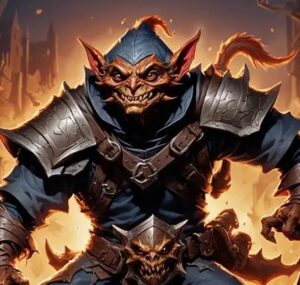 I will also introduce you to one of the heroes of this planet, an Atlantacean scientist
 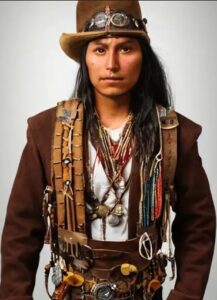 and scholar, who lived over a thousand years, then, according to our histories, used a Star Portal to time travel and enjoy the twilight of his life in pre-colonial western America!”
Following the intermission Orlando Bard continued his tale.
The bottom half of Naga Mountain did have shires, but the upper mountain was treated like the Mountain of Exile. So, too, was the Goblin Cave Mountain left to the Imp Lords, and the higher Hob Goblin Mountains, too, to rule, if they stayed out of the bordering Shires.
But at the time when I first knew Conner Corp, I hadn’t the foggiest notion about that little info nugget, except for what the Reeve 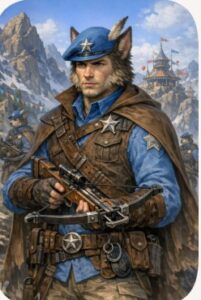 had shared with me at my campfire. Gobs and Hobs, that I did know about. I thought I knew plenty, but I only knew some.
Where Goblins 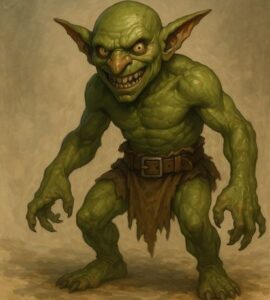 are usually about three or four feet tall and are little sneak fighters, their chiefs were often a foot taller and built sturdier.
Hob Goblins were usually six-foot-tall plus bundles of muscle and savagery. Not much sneak about them, just Comanche yells and dual axes wielded with great skill.
I have read in Sakki Nayana Zazazi’s journal, that early Atlanticean scientists had genetically engineered an intelligent, fast, strong, and dexterous super soldier to make military personnel that would be responsible to guard their research colonies that had been scattered across the safer places of Carnival World.
Sakki is an old Atlanticean word that means scholar or wiseman or shaman. Nayana was the scholar’s first name, pronounced Nuh yuh-nuh. The Nuh enunciated lightly with the emphasis on uh-nuh. Zazazi is pronounced Za with a small a sound and then zaz with a small a sound and the last i sounds like a long e, or zee. Or one could say, Zuh-zah-zee, with the first syllable being spoken a bit faster and the last two syllables being held just a smidge.
Modern Hob Goblins were greatly degenerated, but still formidable creatures, as I can well attest.
Hob Goblins in the past, took those who were born who were smaller and deemed defective, and banished them and warned them that if they returned, they would be executed. In modern times, the practice continues, and the banished ones are called, “retardos” instead of “defective units.”
Wild Hob Goblins that live away from the Goblin Caves, who are even more degenerate than those, or so I have been told, who live in the upper catacombs of the Smoky Blue Mountains, have modified the banishment traditions. Wild Forest Hobs will allow small Goblins to enter their villages for a few hours or visit their war parties along the trail, to trade or exchange news briefly, before expelling them.
Hob Goblins were kind of like Orcs, 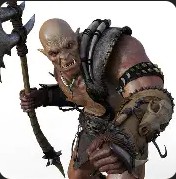 but Hobs were plumb mean and never constrained by honor codes. That mean-streak, or so I’ve read, was not common among the first Hob Goblins, but came with the degeneration that started a thousand years ago among the descendants of the original race.
While ancient Hobs were highly intelligent, modern Hobs are of only average to low brain capacity.
Orcs, even the good ones, were blunt and often sarcastic, but they had a strong sense of honor, and admired fighting ability and anything done with skill from cooking to smithing.
How do I unpack this? But without composing a bard ballad. I can cook but I am not a smith.
If I have a bit of iron ore, and a smithy, I can smith a crude long knife or repair a tear or dent in a piece of common armor or sharpen a blade with a grindstone, but I am not very skilled at it.
I am better at tanning a wolf or deer hide and can fairly easily craft a leather or fur chest piece or helm. But I’d rather pay or trade at one of the scattered villages for that kind of thing. I make my own pairs of moccasins when I have the time. Where did I jump off the rabbit trail now?
Oh, yeah. Some ballads say the Orcs were a product of Atlanticean genetic tampering, blending pig genes with that of humans. Other ballads say that it is a hybrid pairing of Nordic Elves and Goblins. I don’t know. Creator knows.
I have read old scrolls  that say that many Atlanticeans lost favor with Creator when they began genetic engineering experimentation with various animals and humanoids. Of course, the snake worshiper Atlanticeans had their own reasons for angering Creator.
And Creator rarely intervened after that, when the snake worshiper Atlanticeans began a century long guerilla warfare campaign against those Atlanticeans who were not snake worshipers but clearly were no longer following Creator.
Maybe, because from what I gather about Sakki Nayana Zazazi, that he seemed sensitive enough to Creator’s will, that even though curious, for example, about gene splicing technology, and its results, he refrained from undertaking experimentation himself.
More than that, he seemed always to seek Creator, to worship and honor him. And if he failed, he always sought to make things right both with Creator and anyone the old Atlanticean had wronged.
Both the Feyhoomons 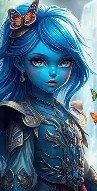 and the Lore Fey
 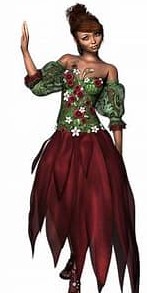 say that the first Feyhoomon came from genetic tampering,
 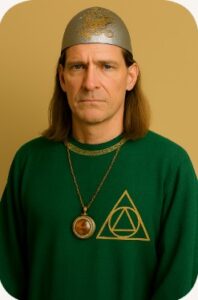 and only after that were human and Fey crossbreeds viable. I call it, Elfred’s Folly, which I will explain later in my presentations, boys and girls, doggies and kitties. Well, enough on that subject.
One of the archway doors entered a meandering lane that wended its way up a slight hill. Have I talked about this before?
On one side of the hill was the remains of a crumbling castle 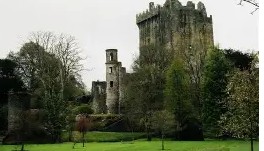 and to the other side was a gated cemetery that had once had rows upon rows of granite monuments, several beautiful, but now battered crypts and many mostly dead fruit trees, apples to the south
 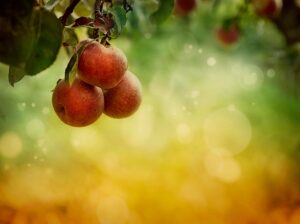 and dragon fruit trees
 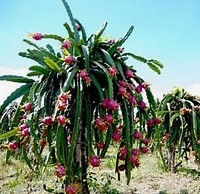 to the northern end, decorated the ancient cemetery.
The goblins knew the trick about entering when the shields were weak. Or you could offer a gold piece, or something cheap and shiny, like a May Day jingle bell or a piece of mica quartzite to a juvenile Fey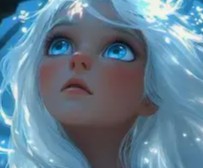 . And have them pop you into a mushroom ring;
 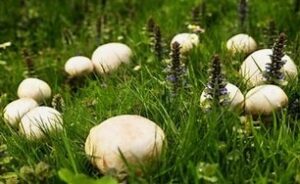 after you exited, if you weren’t too far away, you could enter a force-field shielded archway
 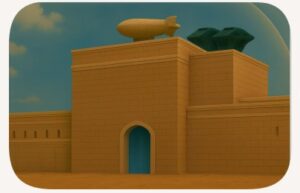 like it wasn’t even there.
The effect lasted for at least an hour but as long as several hours. But the most trouble Conner Corp had, when I first visited them, was the undead from that old castle cemetery  , but just at night, when they would wander into the camp. Nothing happened during the day. I don’t know where the dead went. Or should I say where they disappeared to during the day.
The strongest speculation among the scholars is that the sun forces them into a different dimension. In any event though, as the old earth song goes, “they only come out at night.” Well, that’s not the meaning of the Hall and Oates song, https://youtu.be/dUtQvwBZ6JI?si=LLnUeni-K-i3cg9Kbut it fits my narrative creatively used in this way. Reeve Bo told me, during our first meeting, that both the Cyno and Sabe, as adults, gain the ability to cloak themselves or transfer into a different dimension, but not the same one as where the Skels go during the day.
I had once searched the castle area and spotted apples on one of the cemetery trees. Standing below the tree as the light of the sun dappled the monuments, scattering sharp branch shadings or oval leaf shadows, I had peace and my stomach enjoyed the sweet, wet taste of those big red apples, each one of them bigger than my fist. And I have big fists. Whenever someone says “ham-fisted” the first thing I do is think they are talking about me.
That night however, I had camped in the shadow of one of those fallen castle walls. Like the Conner Corp marines said, the Skels aren’t that hard to fight.
One of the scientists said that the Skels and other undead monsters seemed to get through the force-shield doors easier than other beings. They felt as if somehow the force field recognized them and allowed them through. At least that is what I heard one of the scientists suggesting. Or do they enter that other dimension and bypass the force-field?
When I mentally replayed my visit to the area, I remembered that I had not yet understood how to enter the force field. That understanding had not come until a later visit. But where was I? I was remembering my first visit to the cemetery.
CHAPTER 9
I can remember that night, back during my first year in Carnival World, before I entered the Conner Corp camp, only days after they first used the large Star Portal to enter Carnival World. 
I was alone. My newest weapon was in my right hand, and I had yet to test it in battle.
I had wedged a flat stone into a split tree branch, then wrapped and tied it with a wet strip of deer hide, that had dried snugly.
My blunt hand-crafted weapon 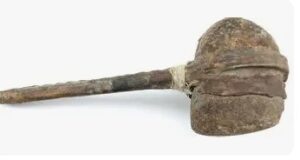 did more damage to them Skels than my knife. I had entered Carnival World with my service pistol but had run out of bullets in no time at all, even trying to be Scotch with them, as my mother was wont to say. Her gentle humor laughing at the expense of my father’s ancestral heritage.
I left it in Sakki Nayana Zazazi’s secret room not long after I ran out of bullets. The lowest level of caves there, under the layer that housed Sakki Nayana Zazazi’s secret rooms, was full of goblins and demented fey, but they seemed easy to sneak passed, so I rarely killed them whenever I visited or exited the last Atlanticean’s concealed study and personal mobile portal room. Where was I? Flint.
My mother’s brother, as my family would say, rather than uncle, had taught me how to shape flint, cut my own moccasins, and even make bows and arrows. My family had great respect for uncles, unless they were of poor character. I think that was more of a native tradition than Scottish. I learned how to hunt, trap, identify edible plants, and spark a fire with flint and steel and tinder or use a bow and a stick. I prefer the flint and steel.
Many days during my youth, my First Nation’s uncle and I, had spent time living off the land in the ancient ways. My uncle, my mother’s brother, had been a native Ojibwe, from Hayward, Wisconsin, who had realized the importance of the tribal traditions. And like my mother, he honored Creator, rather than the small gee gods and elemental spirits. That was one reason that many in the area were not ready to jump to her rescue, as is common with first nations communities, whenever needs arose. The other reason, is that by that time, our extended family had departed Earth.
My father, Macklin McKenzie, had often been part of those early hunts, and once he had married into the tribe, had been taken in like family and had been well liked. He had disappeared under mysterious circumstances when I had been a young teenager. We believe it had something to do with a McKenzie Elite mission.
My uncle and his wife, about the same time, had been killed in a hit and run incident while at the intersection of WI 27 and 29, just north of the Hayward Casino, not too far from the house they had rented. It was just mom and me after that, all of our relatives having died earlier from the predations of the three evil sisters, Sugar Disease, Cancer, and Old Age. Of course, the two wicked men, Vile Droogs and Vile Alc O’Hall, as well, had killed more than a few of our once large extended family.
Those outdoor survival skills, learned from both my father, and my mother’s brother, as well as what I had learned as a special ops Cryptid Hunter, had saved my bacon many times that first year.
I thank Creator for how well my uncle had taught me how to survive in the wilderness, 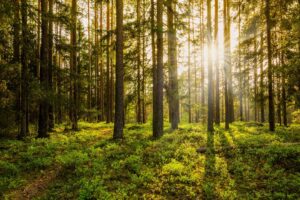 and how that had helped me survive as a Cryptid Ranger on earth, and here also in the wilds of Carnival World.
Yes, I knew what those marines were talking about that first night in the Conner Corp camp. Those Skels scared the living daylights out of me. “Oowa!” I yelped as I dropped my birch bark cup of venison broth, carrot, and wild onion stew into my campfire.  No supper and no more birch bark cup.
If you don’t let the fire up over the waterline and you are careful, you can cook a stew or make some tea with a carefully made birch bark cup and a forked firestick cup holder. You can make slits with sticks like clothes pins or heat a few small clean rocks and drop them into the water of the bowl, boiling your soup and killing parasites. That is another method.
I had lost my mess kit when I was surprised by a couple of barbarians 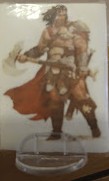
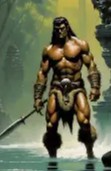 up on a mountain pass. But that’s another story.
Although that is how I learned that somehow, some of the barbarian tribes of the forest mountains here, knew the Spanish phrase Mano a Mano and spoke a funky, at least to someone who knows American Spanish, version of Espanol. They also knew my people’s language from the Hayward Rez. But just like with the Spanglish the Barbarian tribe spoke, it was off kilter. They had learned Ojibwe, or their version of it, from a nearby tribe of humanoid Sabe. You just had to slow down their Samurai chatter, and it was a fast-paced form of Ojibwe. Jarg, the Neanderthal human like Sabe, eight-feet-tall, but with a human nose and large human facial features, and body type, like a larger-than-life comic book caveman, 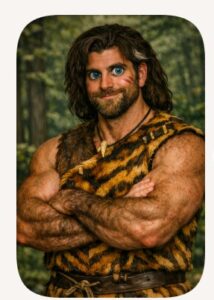 had taught my Barbarian barmaid’s father, Cordova how to speak Ojibwe. Cordova, the father of Anya
 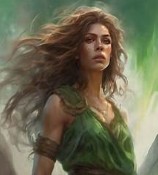 and Keegan,
 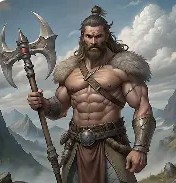 had taught his friend, the Sabe trader, Jarg, how to speak Spanglish.
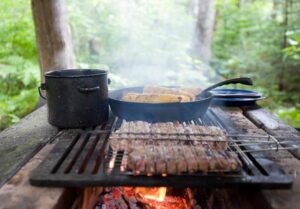
Not more than a week or so after I arrived, in an area just a day’s walk south and east of Cordova’s Barbarian village, I was cooking a mess of sliced elk, with some bear grease, in a small cast iron pan.
The new half-finger gloves I made earlier in the day were a bit snug. I was clenching and unclenching my hands and was breaking them in as I sat by my fire, along the fallen log that Creator must have placed there, months or even years ago, for me to use today.
My new gloves were made to protect my hands when I use my bow. My specially designed leather archers hand armor also made, if I was careful, a decent set of padded mitts for grabbing a hot coffee pot or fry pan handle off my tripod campfire grill.
Originally, the gloves were full-fingered and made to protect my hands when I might be engaging in fisticuffs in the field or during practice, instead of using professional boxing gloves, but I had started cutting off the glove fingers up to just over my rows of finger knuckles.
It is a known fact that even a light pair of gloves, with a little padding can protect your hands when engaging in pugilism. Knowing that your hands are protected, or so I have been told, subconsciously compels a fighter to hit even harder, than he or she normally would, with unprotected hands.
Satisfied with my new hand-armor’s fit, I sipped a cup of my fast-disappearing coffee from Earth, that was slowly boiling in my coffee pot. Near the edge of the tripod, at the border of my fire, following a few sips, I had sat my blue, with white specks, Coleman heavy duty, outdoors-man coffee cup down.

When the coffee ran out, I would have to start looking for more pineapple weed, birch, clover or mountain rose for steeping as a tea. It is a stronger infusion if I let it steep overnight, but sometimes a quickly boiled tea hits the spot. I am not fond of chicory. Can’t stand it at all if I’m honest. If I can’t get a good cup of java, I’d settle for some tea any day.
Alongside that coffee and frying meat, but back towards the edge of my coals, some previously boiled wild potatoes and carrots were simmering in my mess kit pan. I listened to the bubbling and popping, sizzling elk chunks and slices, and breathed in the meaty, brothy scent of the stew. I was just sitting there waiting for that pan of fresh elk slices and chunks, sprinkled with wild pounded caraway, peppercorns, mineral salt, a small handful of shredded pineapple weed, and some onions, to finish cooking through. All the components of my meal-time camping kit, except my folding spoon and my knife, were setting on my tripod cooking outfit, brought from Earth, that hung over my campfire.
I was sitting patiently on the edge of a mountain cliff, waiting for my food, listening to the buzz of insects, and attempting to identify the local avians by their whistling, chiding, squawking, and chirping.
Heady scents of old leaves and spring-soaked, moist loam overwhelmed my crackling fire’s smoky aroma. The acidic and pungent scent of countless tall pines, amongst the quieter odors of mixed deciduous barks, softly laced the air, as I admired the view down in the distant valley. 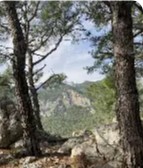 I loved the warm woodiness of the outdoors here on Carnival World, especially in the middle range of the mountains.
Suddenly – and it was my fault – two barbarians, they favored each other, stepped from the mountain woods. I think they were brothers or cousins. They appeared out of nowhere like two ghosts. They were big. I am not a small guy. Both were about two or three inches taller and about that much wider than my beefy, wide at the chest, narrow at the hips, 6’3 ranger’s body.
“Quien eres?” demanded one. He wanted to know who I was and was not happy about me being here. The other seemed curious but friendly.
I had replied, “Por favor, centarce, acerca de mi fuego.”
“Gracias, amigo,” answered the one barbarian, before promising to join me.
But the other  snapped, “Nunca!” as his size fifteen leather boot kicked my cooking tripod and my fry pan, coffee pot, and mess kit over the edge of the cliff.
I never found my equipment, by the way, and I went back down, as soon as I could make my way there, to find my cooking utensils. Damn nice cooking set-up, I tell you! Gone, forever. Or at least for a long immeasurable future.
Quickly I jumped away from the cliff edge, snapping a brusque Ojibwe exclamation, “Oowa!” and my memory muscles settled me into a defensive shuffle. I told them in Spanish that this was the last mistake they would ever make. Not sure if they understood all of it. They probably only understood a few words and thought that I spoke their language like a toddler uttering his first full sentence.
The one replied in his funky mixed Spanish/English, but it was clear enough. What I heard and seemed to see evidence of was that he had been honor bound because he had verbally accepted the grace of my fire. Therefore, he was promising me that he would not fight me unless I attacked him.
The other had snickered at me as if I were a fool and thumped his chest, then snapped, “Mano a Mano, enimigo!”
Now he had weight, height and reach on me. And I suspect he was big medicine in his tribe and had won many fights.
I, however, had spent many years fighting hand to hand, as a youth and a special ops ranger, and my fists have the scars to prove it, especially over the knuckles.
It shouldn’t take the legendary Sherlock Holmes 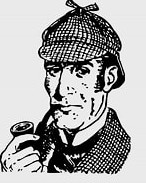 to be able to look at my fists and tell I was an experienced hand to hand fighter.
Not everyone can notice things like that and make the connection, but I had many instructors who could make such learned observations, and I had learned myself to pick up clues like that in my environment, both generally in life and as an Earth Ranger Investigator. It would be almost two weeks before I met Reeve Boregard. He noticed in less than a minute. I had felt like I was getting my mail read by a Pentecostal prophet when I met that Cyno. Or I was working on a case with Sherlock Holmes and feeling like an amateur investigator probie making every mistake in the book!
That Spanglish speaking barbarian, I must admit, had given me a few solid hits, but he knew very little about shuffling into and out of position. And I think he had put two and two together, to make four, concerning my funny looking hand armor. With those and my ham sized fists and experience as a bare-knuckle fighter, my taps hit his face and body like kicks from a Missouri mule.
Mr. Spanish Barbarian had a wide left hook that I took advantage of almost immediately. I stepped inside and lefted him in the wind and righted him with an uppercut, cutting his lip. I had first blood.
He was game, I tell you that.
On his next wide left, I ducked and stepped in close, grabbed his forearm, rolled, and threw him over my shoulder. I was a little concerned by his size, but my gut told me I had the skill and the strength. Yes, I rolled him with a good flying mare. When he got up, faster than expected, his face was white, and his mouth was a big “O” of surprise.
He was a little more cautious then and got in a couple of belly punches on me, but I was just getting into my old flow and threw it off.
After that I popped him in the face a couple of times, and he shook his head like an old bear, and charged at me.
I sidestepped his charge, swirled, caught his wrist, and tossed him, using his own momentum, and sent him flying on his belly onto the unyielding cobblestones. 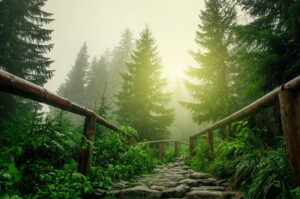
That big barbarian got up a little slower, but not any smarter. He roared and rushed me again, but he had been so mad that he led with his chin. I kicked him in the gonads.
When that Conan of a Barbarian fell forward, off balance, I double fist upper cut that long black-haired neanderthal with the fashion model face, solidly under his large, square, out-thrust and dimpled chin. It sounded like a logging hatchet busting firewood and echoed up the mountain and down in the valley, over the cliff’s edge, like a supercharged sonic boom.
He fell then, hard, and didn’t get up.
His brother said, “Lo Siento,” as an apology and added that his brother was a good brother, but often as grumpy as a silver tip big bear with a sore tooth. The Barbarian added, “We live to the Northwest, a day’s journey, amigo. My name is Santiago, uncle son of Cordova the Wandering Trader. My tribe would, como, like you. Our chief is a good chief. Wise, honorable and smart. His nombre, name is Escarra.”
The wise brother picked up his unconscious brother easily, like a small deer over his shoulder, backed away from me, bowed, then waved and disappeared into the brush. And left for spots unknown, to the Northwest. High-tailed it to his village,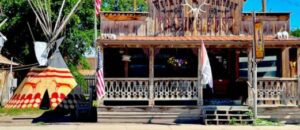 I am sure. Which I found out later was, as Santiago had told me, a good day’s journey north and west, mostly west.
I thought that I probably should stay away from the area and let the one brother simmer down. Anyway, I wanted to look for the lost cooking gear which was somewhere down the mountain. If I found it, it might be broken or bent, but maybe I could cobble it back into shape, good enough to use. About a year or so passed. Further down the pass, I met another barbarian from their village and had been invited by him, as well, to come trade there. And I already knew him! By name anyway. Santiago and Grouchy Guy’s uncle, Cordova!
Yes, I met the famous Cordova the Trader! He had a reputation almost equal to mine. He was a traveling trader on his quarterly circuit over the mountains. This was when I first met Anya and Keegan, too. They are the younger cousins of Santiago and Grouchy Guy. Anya and Keegan were just children at that time. I had no idea they would one day work for me. They traveled often with their father while their mother stayed at the trading post at their village.
Cordova was on a journey with another family. Jarg was an eight-foot-tall humanoid (not the beast man variety) Neanderthal Sabe, pulling a tall, heavy, tinker’s cart 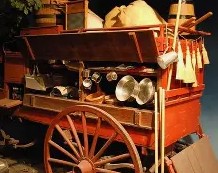 like it was a sturdy pull toy. A tall human woman
 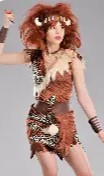 walked beside the Sabe. They had a beautiful young female daughter
  with caterpillars for eyebrows, but otherwise she looked like a leggy and athletic child star from an earth television show. The Sabe had a light gray tint to his skin, but his daughter did not. I found out later that Jarg, with an age line like a High Elf, had easily survived three human wives. Shaa or Sha’a, was wife number four. Their daughter, the baby of the family, was named Teewee. Jarg was quiet. Sha’a (short for Sha-Ra-Rae, greeted me, but Jarg scowled and launched into Samurai chatter, a mixture of English and Ojibwe, much to my shock. Mentally I replayed his message in slow motion. “Quiet woman! We do not know this half-elf! And his smell is off! He has not earned our trust!”
When I spoke to him in a squished, sped up Ojibwe dialect, and called him Niijii, he just looked down on me, with open disdain, shook his long brown hair, opened his larger than normal blue eyes quizzically and shrugged. More Samurai chatter and following a deep nose snort, loud as a bull moose, the Sabe flipped his dark brown, caveman mane, then offered suspiciously, “We shall see Niijii! We shall see!”
On the way I found out that Teewee had an impish sense of humor, and she could run down a sprinting deer – literally. I spied a large buck just within range for a good bow shot. 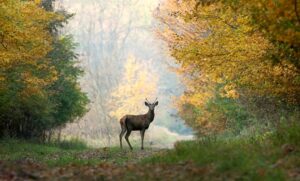 When I whispered to Cordova, asking him if I should shoot it for meat, the Barbarian had grinned and, speculation obvious in the tone of his reply, “If you can, Orlando amigo? If you can?” I took careful aim, and exclaimed, “Oowa!” as Teewee jumped, knocked my arrow out of alignment, sprinted up on the deer, grabbed it by the horns, then twisted its neck, breaking it with an audible snap. While I stood in shock, the others, even old Jarg, just laughed a booming laugh and said following a sarcastic snort, “Mighty hunter you are, Niijii! If not for Teewee, tribe go hungry today, Half Elf!” He laughed that booming laugh again, but the acidic disdain towards me had vanished. I could tell by his tone, that the Old Sabe, because I had not lost my temper and had not become sarcastic or angry with his daughter, had warmed to me faster than expected.
Keegan and Anya giggled and did jumping jacks as Teewee stuck her tongue out at me, laughed, and ran towards Cordova’s village with the buck hanging over her shoulder. I just continued to stare, shocked to my core. What I had seen should NOT have been possible, but I have heard stories of some of the hybrid human Sabe on earth. I could see her outrunning and dropping the deer with her bare hands. But to outrun my arrow, slap it away, and then catch and break the buck’s neck. That was what had shocked me.
Being a cryptid hunter from earth I was knowledgeable of the legendary stories of hybrid sasquatch. They were either sickly and died young like changelings, or they were unbelievably strong and fleet of foot and lived two or three times as long as a human, if not killed early by environmental dangers, like rattlesnakes, ornery predators, werebeasts, or rogue cryptids.
We walked into the camp and Sha-Ra-Rae joined Teewee. The Barbarian mother and her Sabe hybrid girl were already preparing the deer beneath a tree just outside of the camp. Sha and Teewee worked together expertly, and hung the carcass on the limb, under a metal hook, to bleed out. Normally, they would have disemboweled the deer out in the woods, and then carried it back. But as it had been killed just outside of the village, they hung it on the butchering tree, 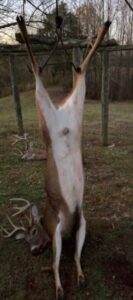 just along the exterior village fence. Since Carnival World was always summer, they would not leave it hang for a few days, as would be common on earth, especially if harvested in fall or winter.
Their older cousin Santiago had been happy to see me, but the grumpy brother avoided me. Indeed, Santiago, the happy brother grinning from ear to ear, took me to meet everyone else, after I had visited Cordova’s wife at the Barbarian village trading post. That is another story; one I will not share today.
CHAPTER 10
Well, I guess I got carried away. Where was I and what sidetracked me? Campfire.
Yes, indeed. Back to what I was saying about my Blarney Castle Cemetery adventure and the Skels.
It is bad enough to set around a campfire and talk about haunts and such. That group of old Skels, wearing metal horned helmets, charged up the hill, as the sun was setting, carrying with them the fetid smell of vulture pecked carcasses left laying out too long, broken and scattered, but not yet cleaned and deodorized by time and environment. The sight and sound of it rattled me as much as their bones rattled in their armor.
Yes indeed, the bones of the Skels rattled. The Skels cried this fluted moaning, hooting wail, just like the Conner Corp people said, as we sat around their campfire, and the memory of it was unnerving.
The soldiers said that the zombies, depending on whether they were male, or female just vented long steady groans. The males were thick voiced and guttural. Female zombies had higher, strident voices, when they moaned, and from time to time would scream an ear-splitting keening wail. And while the carnal house stench of the Skels was annoying, one of the rangers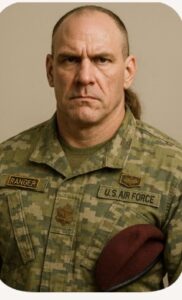 had offered, the tomb rot stench of zombies was literally overpowering. In my several years on Carnival World I have never fought any zombies.
Author’s note: One day, Orlando Bard would end up fighting Zombies, with the Alpha Team Rangers,  in a land far away, a place he never expected to travel. That story will be presented in the future, only starting at the end of Book One.
Well, I had been a good soldier, and it was nip and tuck, but I had been well trained by my uncle and also by my Uncle Sam special ops trainers.
I scattered that squad of Skels from hell to breakfast, with my newly made primitive stone-head club, and then I rattled my own hocks out of there.
And I never spent a night there again, unless there was a good bounty. And then I have thought about it, more than not, and let some other eager bounty hunters reap the rewards.
Maybe I just don’t like the undead. Unless I must deal with them, I don’t.
Padre once told me, that unless I demand in the name of the Creator’s Son, that they are forbidden to return to the land of the living, after I kill one, it will eventually come back. I think he’s right, but I tend to think like a warrior and not like a cleric. Unless he’s there to remind me, I tend to forget. And I think it is better if we agree together on that anyway.
I hadn’t seen any zombies, but from what the Conner Corp scientist and marines sitting around their own fire told me, the zombies were worse than the Skels. And now, years later, I can tell you, there are worse things than Skels and zombies that wander that graveyard at night.
From time-to-time zombies, with a stink worse than a West Virginia Wood Booger, dead men and women walking, strolled through that force shield when it was weak.
Those foul undead had been visiting almost every night and they, Conner Corp, had built a barrier. Actually three, as the undead had never used the Wolf Den Overlook doorway.
I hadn’t noticed it until I had entered that first day. I had wondered, upon circling the great wall earlier, why I couldn’t see into their camp along the western wall. Well, then I knew why.
According to the soldiers, they weren’t hard to kill, especially the Skels, but the zombies brought sickness. Many of the soldiers had become so sick they had to be sent back to America through the Star Portal. It was afternoon, and we wouldn’t have to worry about cemetery wanderers, so I squatted by their fire 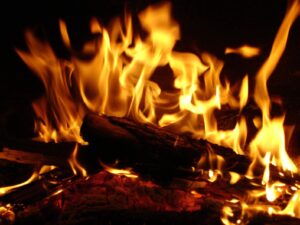 and chatted it up with them. I told them my story about my run-in last year with the Skels. We hit it off well.
By my cheery greeting, and our initial conversations, in a purposely muddled American English, the meeting had gone well. To them I was a friendly native with knowledge of the surrounding countryside; I had earned their respect and welcome.
They were curious as to how I knew their language, even if I didn’t speak it all that well.
I didn’t tell them, of course, that I was a former U.S. special ops soldier.
What I did share with them, was a fact I learned from my year of adventuring, after first coming through the gate in the Goblin Caves. Dialects and accents here were confusing, but were often strange forms of English and Spanish, as well as a Southwestern American Indian dialect. Those were the most common native languages on Carnival World. And theNeanderthal human Sabe, Jarg,spoke an odd variant dialect of my Ojibwa language and English/Spanish. Only using Spanish terms rarely.
Reeves were polyglots like the Ratlings 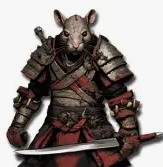 and had an almost photographic memory like the
Crystalins 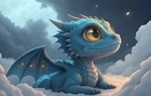
 . They spoke a combination of Atlanticean and American English, but had also picked up a bit of Spanglish, Nordic and Wood Elf. Reeves were also fluent in several dialects of the Samurai chatter, American English with a scattering of Cherokee, Nez Perce, Navajo, or Ojibwe.
The Minotaurs, Pan Fauns and Centaurs here, were rare – they lived hidden away in herds along the coastal lands, east, south and west – and spoke a garbled form of French Canadian. Although a few had found homes in the ruined castles on the east and west sides of the Nordic Mountains 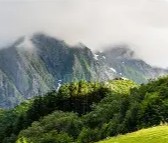 near Ayengard City.
Antlered Cervidae 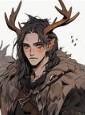

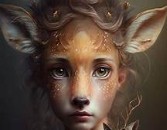 lived in smaller units, but in caves near springs, sometimes along the coasts, but also throughout the mountains, and built spike and log barriers, like the Orcs, but with thinner posts. The Deer Fauns enjoyed laughter and parties but were very shy about spending time with other races until they got to know someone. If you approached them and talked with them and they didn’t feel threatened, they would socialize but were shy and quiet until they trusted you. If cornered, the Cervidae would fight, especially the males, but were more apt to hide or run.
Only the centaurs had four legs. Minotaurs and Cervidae were bipedal with very human faces.
Centaurs were very scholarly and crafted plows for plowing gardens. Books  and scrolls
  were more valuable than gold
  and gems
 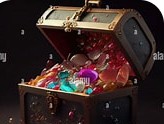 to the horse men.
Minotaurs 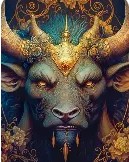 were known for stubbornness, but it was usually sullen, pouty hardheadedness rather than an aggressive behavior.
Minotaurs were usually bovines, but there were donkey centaurs, as well. Bovine centaurs were the most common. The Icthyocentaurs could only be found in the sea and were the least common of all the Minotaurs.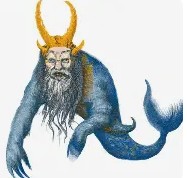
The last three races were early experiments of Atlanticean scientists. They had not been designed as soldiers, and unless you attacked them, they were usually friendly, especially the Cervidae fauns. Some had been killed following the Atlanticean experiments. Other scientists, being more compassionate, following their testing phase, had warned their experimentally created hybrids to stay out of trouble and distance themselves by many days travel from any Atlanticean colony.
Minotaurs and Centaurs were expert spearmen. During the mating season, which occurred a few days every month, during the full moon, Minotaurs and Centaurs were uncharacteristically territorial and short-tempered. Otherwise, during the rest of the month, they were almost as affable and sociable as the deer fauns. Minotaurs, Centaurs and Cervidae were home bodies and rarely left their villages except for local hunting and gathering and tended to found villages away from settled areas. I had never seen any of these hybrids in either of the Conner brother’s theme parks.
Goat fauns, however, were even more rare than the deer fauns. They tended to evil, loved rape and mayhem and lived in the middle range just outside the Dark Naga mountains, but mostly in the neutral underground cavern systems. The old Dark Naga Queen had blended them with her people, but the young Dark Naga Queen 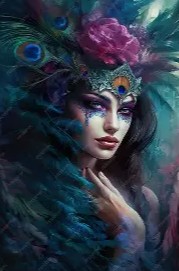 had banished them from her lands shortly after taking over the throne. Pan goats only used white clown makeup during ritual festivals and had an alliance with the Dark Naga Assassins guild. They spoke ancient Greek and Ophidian.
The Hyena monster men 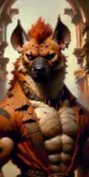 used a form of British or India English, with coughs, barks, and grunts, mixed with Swahili. Although there were clans of flaming red haired Hyena Men in the southern islands who spoke ancient Egyptian. The Naga
 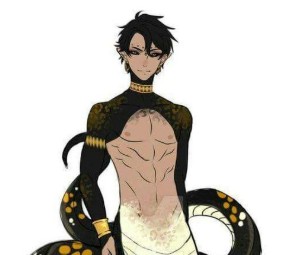 spoke Ophidian: American or British English, sometimes with a Hindi accent, that was a whispery, hissing, rattling, whistling language.
Dark Naga were mostly found under the Dark Naga castle, but wild ones wandered the mountains of the eastern side of the continent. The black and yellow haired Hyena Monster Men wandered the coasts  of the southeast and rarely came this side of the mountain barriers of the Misty Mountain that ran north and south in the center of the Borderlands.
  The east west range were called the Smoky Mountains, although many smaller sections had different names depending on who owned the area. For example, the Red Dwarves lived in the Red Dwarf Mountains, by the South Sea, but that range of mountains was called the Misty Mountains.
Most Dwarves spoke British English with a smattering of old Scotch. Padre  had spoken in British English with a smattering of Old Scotch, when I first knew him, but now he has started to use a variant of Modern American English like me and the Conner brothers, only using Scotch Irish vocabulary occasionally. Sometimes if Padre is tired or anxious, he may temporarily slip back into using more Old Scots jargon instead of mostly contemporary English.
Most of the Barbarians 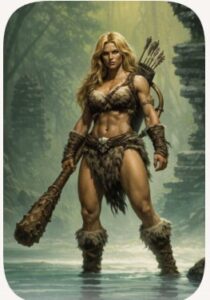 spoke an English and Spanish variant. But a few of the Barbarians from the Nordic Elf mountains spoke European English with either Scandinavian or Russian words. For example, a Nordic Elf leader could be a king or a jarl. The Nordic Elves who had interbred with the Southern Barbarians, who lived near the Red Dwarf mountains, used British English, but with several words of Gypsy derivation like yog for fire or Oh Dordi for Oh Dear! Pral means brother or friend and Pani is water and Padda is bread, for the Southern Barbarians and Red Dwarf clans. Savvy means happy and wise. The Red Dwarves may use these same words, but also add a few Old Scots terms. All the Dwarves whether they are White skinned, Red skinned or Black skinned, call non-dwarves’ outlanders.
Nayana Zazazi’s Old Enochian, (not the twisty Dark 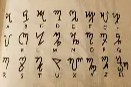 Enochian runes of the Fallen Ones) by this time, was pretty much a dead and forgotten tongue, although a few scholars amongst The Elves, Hobbits, Dwarves, and Naga, and of course the Cynocephali or Reeves, could still stumble and fumble their way through an old book or scroll if they found one, the Cyno doing the best translations. Certainly though, not perfect renditions like Zazazi’s sentient computer or his crystal skull
  translators. Lady Q,
  the White Naga Princess, Arch Professor of Flying Serpent Guild, of course, could speak or read Old Enochian or Atlanticean with only marginally less skill than the Scholar and his equipment.
The difference was kind of like that between Old English and modern American with several possible shadings of accents. One of my Cryptid Four teammates, when I was Raphael McKenzie, was from Brownsville, Texas and he talked with a slow twang. And he had the audacity to tell me that I was the one with an accent!
I couldn’t hear my accent, but I could certainly hear his booming Texas drawl.
Carnival City bank liked my gold nuggets and a few gems I had scrabbled in my jaunts along the foot of the mountains that led up to the northern border between the Borderlands and the Badlands.
Some had to be chipped out of ore, in the small caves and stony outcroppings, scattered throughout the wilderness. Others I found sifting the mountain streams that meandered, gravity forced, downward, in places from on high down to the foothills of the mountains.
Mostly I found purple gems. A little less common were the yellow, orange gems and red gems. Sapphires were quite valuable, but emeralds had the highest value. Of course, rarity, carrots, and color or saturation level were factors that were used by the bank jewelry assessor in presenting his or her evaluation.
While it only rained occasionally on Carnival World, springs were plentiful 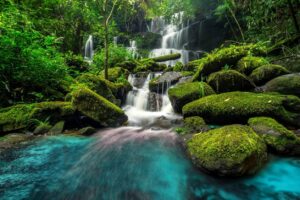 and heavy morning dews were common across the planet.
Many of the roads that led up into the mountain passes, built by the Atlanticeans, had cobblestones.
Time and weather eroded some stretches and left hard and soft sandy spots, but whatever granite they used had endured amazingly well.
The mountain paths 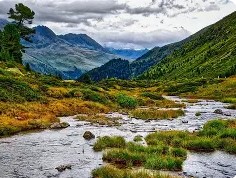 here were breathtakingly beautiful. Many species of birds,
  some colorfully brilliant
 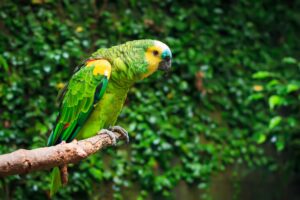 and flashy, and others with feathers of dull brown, black, and gray, fluttered and trilled with melodious chirps and squawks.
Bees big as your thumb hovered and buzzed like little yellow and black helicopters kissing the abundant wildflowers that speckled and sporadically carpeted the greenery. 
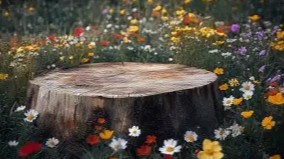
I was always looking for bees. Even though springs were plentiful here, it worked the same as on earth; if you couldn’t find a spring, follow the bees. Wildflowers need water and bees need water!
Splashes of color were painted on the verdant hillsides,  nestled along the pathways in bursts of glorious oranges, blues, reds, and purples. Sweeping and majestic the high backdrop of the smoky blue mountains
  with their shrouding of icy snow at the peaks, competed with Creator’s floral canvas of the mountain trail itself.
Carnival World was a wild, untamed land, of always summer, and snow graced only the mountain peaks. In the higher reaches, along the mountain trails, up high where the passes dropped over the craggy tops, there were even corroded gray granite steps like stairways.
Conner Corp found my knowledge of the area very useful, and it hadn’t taken long for me to become an invaluable asset, but all the while I was careful not to let slip too many clues that I knew things about earth that I should not. I knew that I would always need to maintain my new identity, because my old superiors, if they knew I was here and alive and AWOL, would either try to assassinate me or lock me in some above top-secret black hole cell, back in the states, and throw away the key.
https://wayneoconner.com/carnival-world-book-one-all-chapters/